

Home / TABGEEKS LIVE / Episode recap
Boom breaks the sound barrier, Meta teams with Oakley and DeepSeek shakes Nvidia
A week that felt like a month: a civilian jet went supersonic, Stargate pledged $500 billion for AI infrastructure, Ubiquiti shipped a coax extender and DeepSeek knocked Nvidia's stock down.

Jesse Nowlin
Host, TABGEEKS LIVE · · 3 min read
I went live right after watching Boom Supersonic's XB-1 test plane become the first civilian aircraft to break the sound barrier since Concorde. It was a smooth flight, broadcast on YouTube and X, and the company is now scaling up to the full size aircraft.
From there the week only got busier: Meta and Oakley, a $500 billion AI infrastructure pledge, Samsung Unpacked and Android XR, a new Ubiquiti coax extender, the AI LPR camera, Protect 5.2, the DeepSeek selloff and NotebookLM Plus for Workspace.
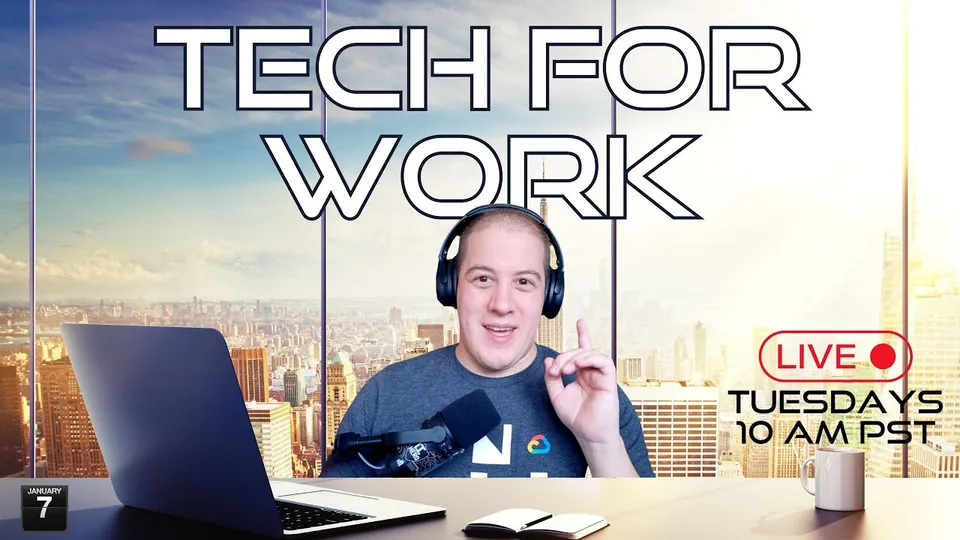
Prefer to watch? The full stream is right here. 40:05 · Watch on YouTube
Jump to a section in the video
Supersonic again
The last time civilians flew supersonic was 2003, when the Concorde program ended. Military jets like the F-16 and F-35 go supersonic all the time, but XB-1 is a civil aircraft, and its test pilot has logged a lot of hours at supersonic speed. Major congrats to the team.
Meta and Oakley, Stargate and Samsung
Meta is partnering with Oakley, which is owned by the same company as Ray-Ban, on higher end smart glasses, possibly with a screen and wrist control. Personally, I would take a normal pair of dark sunglasses with a camera; the Ray-Ban lenses are not dark enough for me.
The Stargate project pledged $500 billion to build AI infrastructure in the US. Satya Nadella's response on TV was a great moment: he is good for his 80, as in the 80 billion dollars Microsoft spends on data centers every year anyway.
Samsung Unpacked brought new phones, including a super thin Edge model, and teased the Android XR headset, Project Moohan. It runs Google's Android version for virtual and augmented reality, and MKBHD got an early look. My question is always whether XR is ready for work, and with XR glasses I think we are mostly there.
New Ubiquiti gear and Protect 5.2
The PoE over 2-Wire Retrofit Extender is essentially a coax converter: Ethernet goes in, travels over existing coax and comes out the other end. It is limited to 10/100 Mbps, supports PoE++ pass through, draws 3 W max on its own and is managed in UniFi. Older coax runs are a problem I have hit before, so I want to test it.
The AI LPR is now out for license plate recognition. I have a community center camera that faces one of the main public roads in town, and I want to see how it handles nonstop traffic, especially at night. Protect 5.2 also lets you use the cameras on access control devices in Protect, which I have been begging for.
DeepSeek and the Nvidia selloff
DeepSeek released a more efficient AI model, and Nvidia's stock dropped around 17 or 18% as people assumed nobody would need as many chips. It was already climbing back. My view is that more efficient models still need enormous hardware to train, and the applications that run on them will drive demand. It is open source, which is interesting, but with any Chinese company there are open questions about who else is involved.
NotebookLM Plus and the bottom line
Google emailed that NotebookLM Plus is rolling out to qualifying Workspace editions as a core service, with more on Enterprise details to come.
Bottom line: try the coax extender if you have legacy cable you cannot replace, and do not overreact to one efficient model; AI hardware demand is not going away.
Gear in this episode
- UniFi PoE Over 2-Wire Retrofit ExtenderSpecs and compare for UniFi PoE Over 2-Wire Retrofit ExtenderUbiquiti Store (opens in a new tab)
- Camera AI LPRSpecs and compare for Camera AI LPRUbiquiti Store (opens in a new tab)
Ubiquiti Store links are affiliate links. If you buy through them, the channel may get a small commission at no extra cost to you. Affiliate disclosure
Related
UniFi AI Turret review: 4K, plate and face recognition, and microSD edge recording
Dec 13, 2024 · 4 min read
XREAL Air 2 Pro vs XREAL One: which display glasses should you buy?
Jan 17, 2025 · 4 min read
2024 Google Workspace year in review: 341 updates and our favorites
Dec 30, 2024 · 5 min read
Jesse Nowlin
Founder of TABGEEKS, former IT Director and Google Developer Expert. TABGEEKS LIVE recaps the week in tech every Friday.
About the show