

Snap Spectacles hands-on: AR glasses at AWE, and why in-person tech is next
Snap says a consumer version of its Spectacles is coming in 2026. I tried the developer kit at AWE, from virtual pets to an onboard AI assistant, and compared it with my XREAL One Pros.

Jesse Nowlin
Founder, TABGEEKS · · 4 min read
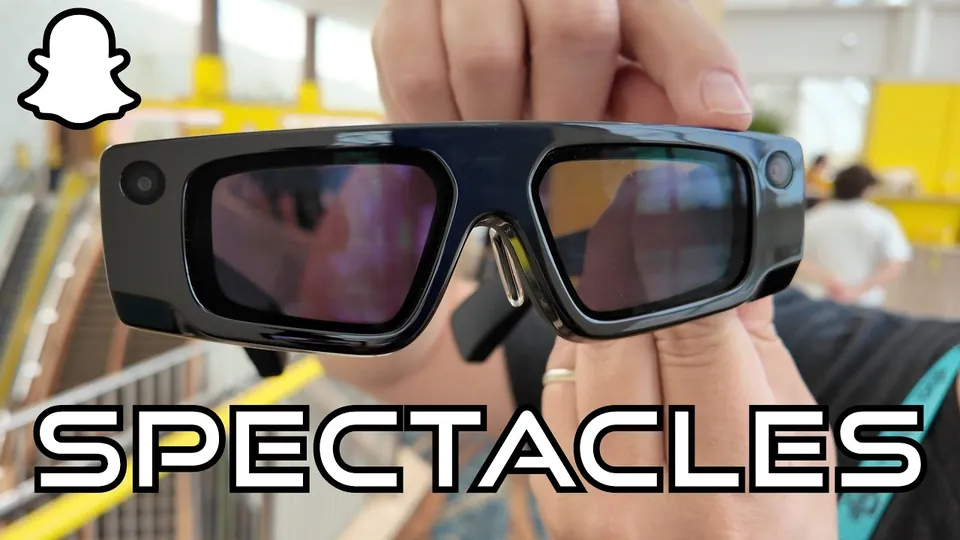
These are the Snapchat Spectacles. I tried them at AWE, where Snap took over pretty much the entire upstairs promenade to show off its augmented reality glasses. On stage, Snap announced that a new consumer version is coming in 2026.
What I wore is a reference design you can only really get as a developer, for building experiences for the glasses and the AR elements in the app. As the consumer device approaches, those experiences will carry over to it. Keep that in mind, because these are rather large. They are pretty massive on my face.
Prefer to watch? The full video is right here. 10:34 · Watch on YouTube
Jump to a section in the video
Spectacles vs XREAL One Pro
For a sense of space and features, compare them with the XREAL One Pros I have talked about before. The XREAL glasses have their displays at the top and a prism in front of your eyes, so you see a full-screen image. They are built for rich, immersive media that generally blocks out the world around you. They can do passthrough, but I mainly use them to put my desktop screen up in space in front of me, which is an absolutely fantastic use case.
The Spectacles are designed for passthrough augmented reality, overlaying a digital world on the real one in front of you. They are much bigger, because the tech hasn't finished being shrunk down to consumer size.
The other big difference is that the Spectacles are a complete all-in-one system. The XREAL glasses have no battery and very little compute. Their very powerful chip has one job: handling the degrees of freedom and anchoring your content in your space. The Spectacles have a full operating system, computer, battery and communications, so they can talk to your phone and apps over Bluetooth, and I believe Wi-Fi as well.
Spectacles hardware I could see
| Part | What it does |
|---|---|
| Front cameras | One on each side |
| Status light | Center front, blinks while sleeping |
| Tinted screens | Show content while you look through them |
| Speakers | Downward firing, on the arms |
| Controls and charging | Buttons on top, USB-C port on the back |
The demos: Peridot and an AI that sees
Wearing them is like wearing a regular pair of sunglasses, except that elements are superimposed over the world as you look around. I did a very cool demo with Niantic's app, I believe called Peridot, where cute little creatures run around and you can pick them up and play with them. The glasses track where your hands are in front of you, so you can interact with virtual objects.
I also tried an AI demo station, a little like what I experienced with Google's prototype glasses at Google I/O. I believe this one also used Gemini. It looks through the glasses' cameras and uses onboard connectivity and processing to answer questions, instead of going through your phone. Walk up to a coffee machine, ask how to empty the grounds, and it tries to identify the machine and give you the answer.
The glitchy parts
I don't think we are entirely there yet, and that is not on Snap, since Spectacles are the platform other developers build on. Looking at some records next to a record player, I asked what one was. It identified it correctly, but only after I looked directly down at the record, not when I glanced at it in my hands. Then I asked how long the record was, meaning the running time, and it opened the measuring app and started measuring its dimensions. Not what I meant at all.
The worst it's ever going to be
I am not going to wear these out and about. Some promo materials show everyone walking around in Spectacles, which is a utopian wonderland given these are a developer preview. They won't be this large forever. Snap, Meta, Apple and XREAL are all putting a lot of money into this. As XREAL's Ralph said on stage, they are working to make the hardware smaller and the screens bigger.
“This is the worst it's ever going to be.”
Even so, what Snap has crammed in is incredibly impressive, and I look forward to the day it is small enough that folks like me, who don't wear glasses regularly, have a comfortable way to use a digital layer in daily life.
Why AR matters for real places
With so much AI slop flooding online platforms, I think we will put more weight on in-person experiences. The walls of a museum or historical site are real, and what you see there with your own eyes is accurate. The problem is that the way those places display information is often static, boring or outdated.
A pair of glasses like these can add tooltips around you, a guided audio tour with an arrow overlaid on the floor, and archival or animated video next to an exhibit. It complements the experience and can be curated to be accurate.
My favorite example is the Louvre. As I understand it, the Louvre used the Nintendo 3DS for many years to guide visitors on tours, and recently had to shut that program down because it ran out of repair parts, not because the idea stopped working. My pitch to the Louvre: get in touch with Snap and Niantic and do that experience on something like Spectacles. It would be vastly superior.
Bottom line
The Spectacles developer kit is big, the battery doesn't last forever, and the AI still misreads what you want. But the all-in-one hardware and the demos make a strong case for passthrough AR, especially for museums and other in-person spaces. I am very excited to see what the 2026 consumer version looks like.
Gear in this story
- Snap Spectacles (developer kit)
- XREAL One Pro
Ubiquiti Store links are affiliate links. If you buy through them, the channel may get a small commission at no extra cost to you. Affiliate disclosure
Related stories
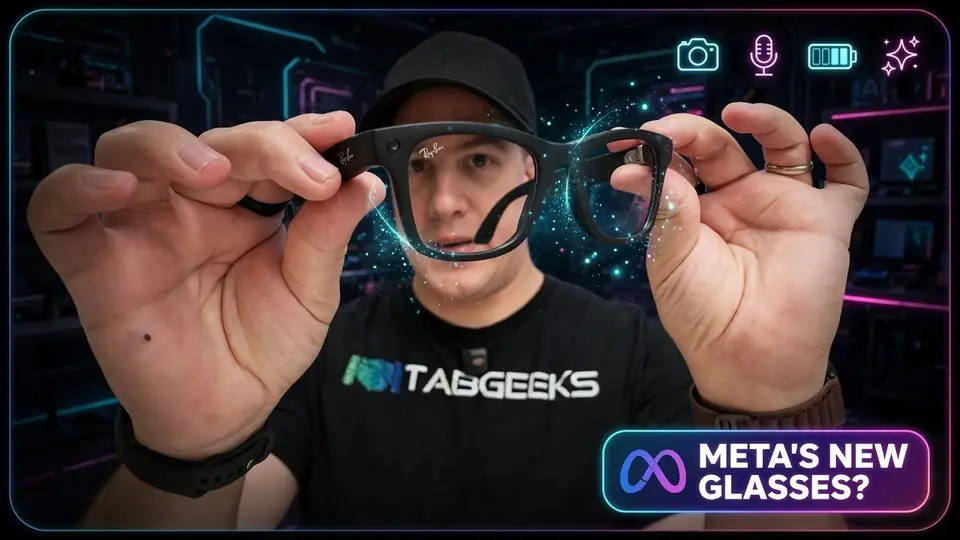
Hands-on with the new Meta Ray-Ban Gen 3: Aviators, a camera-free option and a smaller camera
Sep 25, 2026 · 4 min read
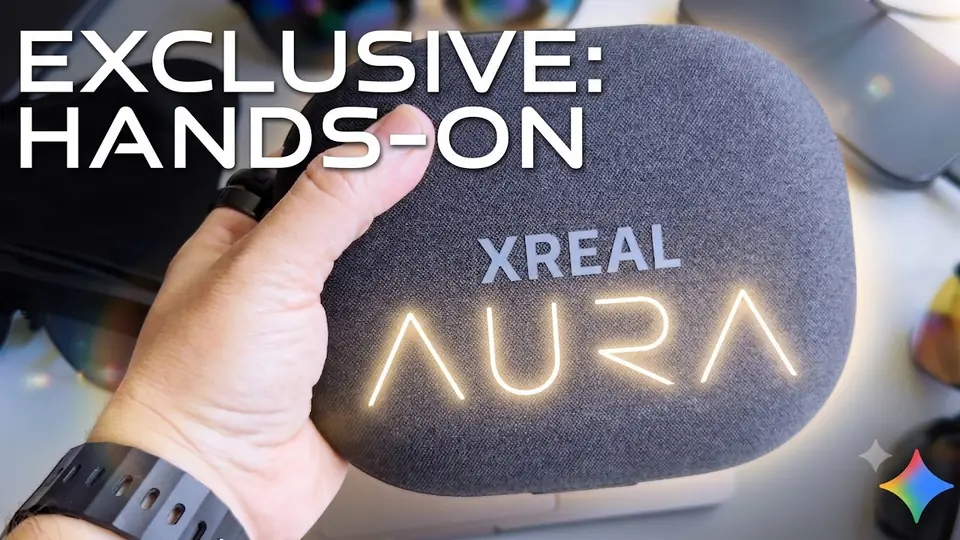
Unboxing XREAL Aura: Android XR in a case that fits your backpack
Jun 24, 2026 · 5 min read

XREAL's Project Aura, X1S chip, Neo battery and Enterprise push: my interview with Ralph
Jun 12, 2025 · 4 min read
Jesse Nowlin
Founder of TABGEEKS, former IT Director and Google Developer Expert. I test networking and pro tech on real job sites, then write up what I find.
Join the community