

Elgato Wave Go review: the tiny travel mic I didn't know I needed
Elgato's Wave Go is a $99 wireless mic kit for creators who film on their phones. I compared it to the DJI Mic Mini in the studio, then took it to the park for range, train noise and a live acoustic set.

Jesse Nowlin
Founder, TABGEEKS · · 4 min read
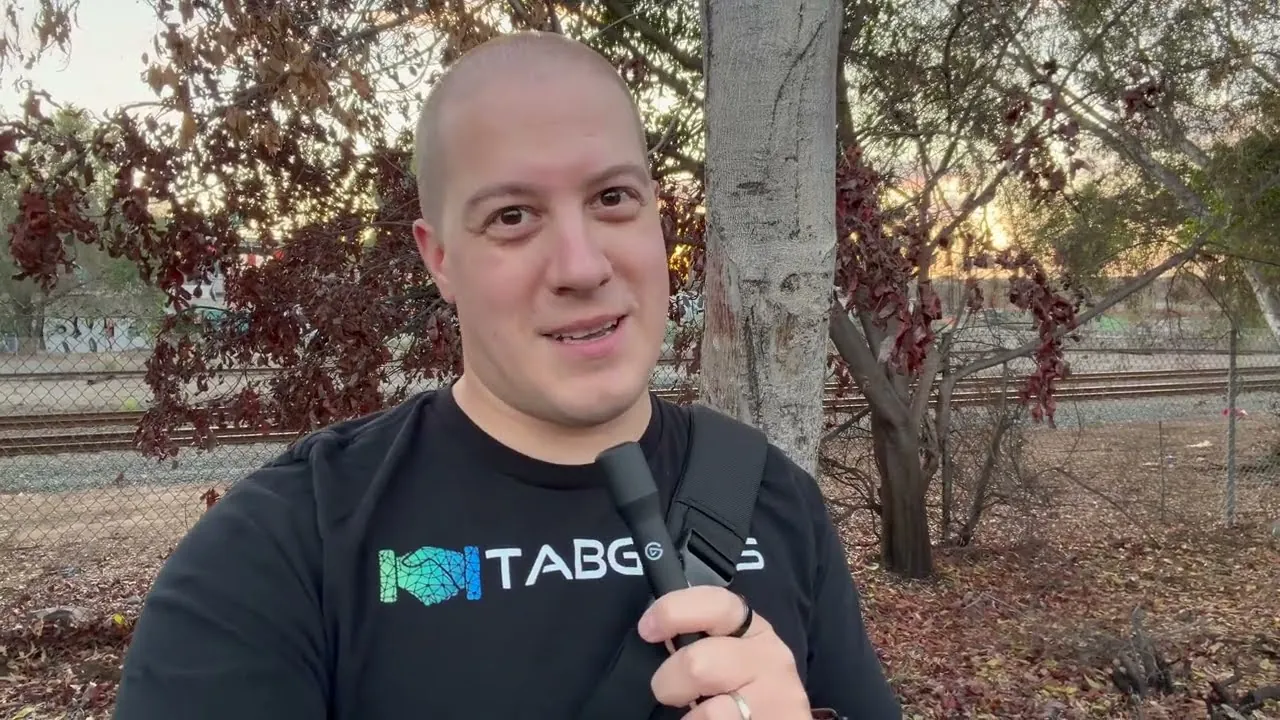
I travel a lot for this job. Houston one week, LA the next, Google events in San Francisco, and a stack of flights coming up in January. That means a lot of what I film happens on my iPhone, and audio is the part I have always kind of winged. Carrying a separate mic, keeping it plugged in and set up, is a pain. Elgato's new Wave Go is built to make that simple.
It is a $99 wireless mic kit for people who film on their phones. I unboxed the blue Day One edition, compared it to the DJI Mic Mini I already use, tested it in the studio, then took it to the park for a 100 foot range test, Metro trains going by and an impromptu acoustic set from a local surf rock band. It is going into my everyday carry.
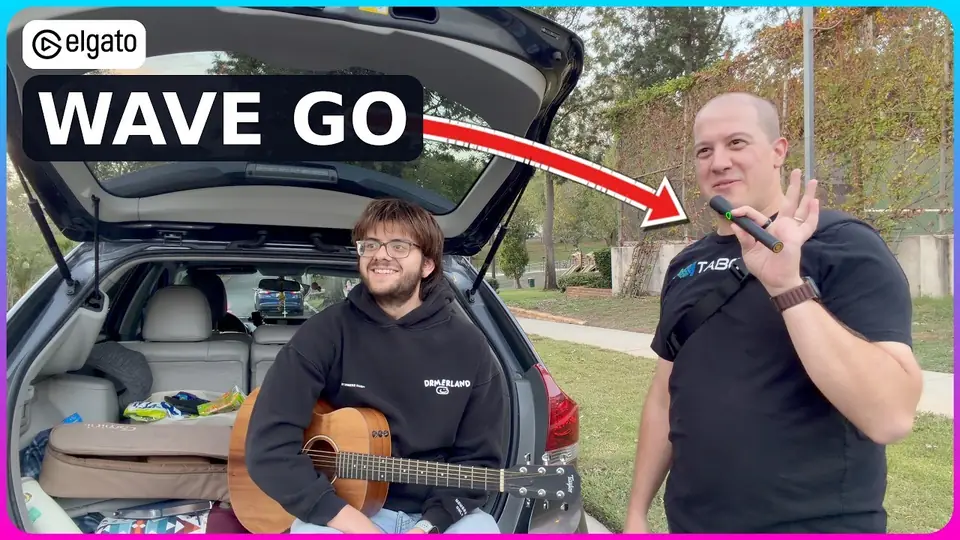
Prefer to watch? The full video is right here. 17:59 · Watch on YouTube
Jump to a section in the video
What's in the box
The getting started guide is printed right on the cardboard, with a QR code. Inside you get the charging case, a pouch with a USB-C to USB-C cable and two sizes of dead cat windscreens (one for the handheld, one for the bare mic), plus the usual safety paperwork. In the case are the mic, the handle, a magnetic clip, a lapel clip and a tiny USB-C receiver that supports pass-through charging, so your phone can keep charging during longer recordings.
The Day One edition is a blue colorway with matching accents on the handle. It is only sold on elgato.com.
The battery is in the handle, not the case
This is the clever part. If you have used DJI mics, the case is the battery. Elgato flipped that. The Smart Handle holds the battery, and it charges the mic through little gold pins when the mic sits inside it. The case still charges everything over USB-C, but it doesn't have to come with you. You can carry the handle, the receiver and the mic and leave the case at home.
Battery life
| Setup | Recording time |
|---|---|
| Mic on its own | Up to 8 hours |
| Handle recharges | Up to 5 times |
| Total with the handle | About 48 hours |
Elgato's figures, as stated in the video.
When I plugged the case in, my cable's display showed it pulling about 2 W. That doesn't sound like much, but these are tiny batteries that still run for hours.
Smaller than the DJI Mic Mini
I thought the DJI Mic Mini was tiny. Side by side, the Wave Go mic is almost half the size, and when it is clipped on it is barely there. It has a single button on the side, the mic on top and three gold charging contacts on the bottom.
Drop it into the handle, twist the top on, and it becomes a handheld interview mic. The mic then changes its pickup automatically. On your lapel it picks up your voice plus a bit of the room. In the handle it focuses tighter and rejects more of what is around it, so when you point it at someone else, you hear them and not crosstalk from yourself.
One feature I really like: double-press the button on the handle or the mic and it starts recording on your iPhone. Double-press again and it stops. That is a big deal when your phone is on a tripod out of reach.
Studio and park tests
In the studio I recorded the Wave Go and the DJI Mic Mini side by side, both for my voice and for the ambient noise from my server rack fans. I left out my usual noise floor processing for those clips so you hear what each mic actually picks up.
Then I went to the park with my tiny travel setup: a 1 foot Lume Cube tripod stand that extends to about my height, and a Fly Mile MagSafe phone mount with tripod adapters on the side and bottom. I clipped the mic to my lapel and walked away with my back to the phone. Elgato rates the range at 100 feet. I walked about 100 steps out, past a parked car and next to the train tracks, and the receiver's green light showed it stayed connected the whole time.
The Metro trains were the real test. They are not freight trains or jet engines, but they are loud enough that you would normally raise your voice. I kept my voice at the same level as they passed, first on the lapel and then in the handle, so the recording shows exactly how much gets through.
“This is definitely going in to my everyday carry.”
Acoustic in the park
Elgato's notes say the Wave Go isn't meant to be a studio mic for recording music. But there was a guy playing guitar out of the back of his car, so I walked over and asked. It turned out to be Pine Avenue, a surf rock band from North Long Beach, and they played a song for the review. They found it convenient, well made and sleek, and liked that the mic pops out of the handle for content creation, which every musician has to do now.
Bottom line
For $99 you get one mic, the Smart Handle, the receiver and the case. You can buy another transmitter separately. It is tiny, the battery-in-the-handle design means less to carry, the automatic pickup switching makes it a real two-in-one, and the double-press record control is genuinely useful.
If you film on your phone while traveling, or do run and gun interviews, it is a major upgrade over the phone's own mic. I love how easy the setup is, and it is now part of what I carry everywhere.
Gear in this story
- Elgato Wave Goelgato.sjv.io (opens in a new tab)
- Fly Mile MagSafe phone mountlink.amazon (opens in a new tab)
- Lume Cube 1 ft tripod stand
- DJI Mic Mini (comparison)
Some of these store links are affiliate links. If you buy through them, the channel may get a small commission at no extra cost to you. Affiliate disclosure
Related stories
DJI Osmo Nano unboxing and first look: a tiny camera with a lot in the box
Oct 1, 2025 · 4 min read
Aohi Starship 240W power bank review: laptop power in a soda can
Apr 2, 2025 · 3 min read

Don't film everything: my framework for covering tech conferences
Jun 12, 2026 · 6 min read
Jesse Nowlin
Founder of TABGEEKS, former IT Director and Google Developer Expert. I test networking and pro tech on real job sites, then write up what I find.
Join the community