

Smart glasses, the next frontier: Meta, Lenovo and XREAL on where the category goes next
Are AI glasses or display glasses the future? I recorded a panel at AWE 2025 with leaders from Meta, Lenovo and XREAL, moderated by analyst Tim Bajarin. Here are the takeaways that matter.

Jesse Nowlin
Founder, TABGEEKS · · 6 min read
Smart glasses have gone from niche gadget to a real category in just a few years, and the people building them do not fully agree on what comes next. At AWE 2025, I recorded a panel moderated by Tim Bajarin, chairman of Creative Strategies, who has researched smart glasses for about 10 years.
On stage were Kelly Ingham, who leads wearables partnerships at Meta, including the EssilorLuxottica partnership behind Ray-Ban Meta; Jason McGuigan, global head of commercialization for Lenovo's XR team; and Ralph Jodice, XREAL's general manager for North America. Here is what they said about AI, displays, customers, enterprise, platforms and the next two years.
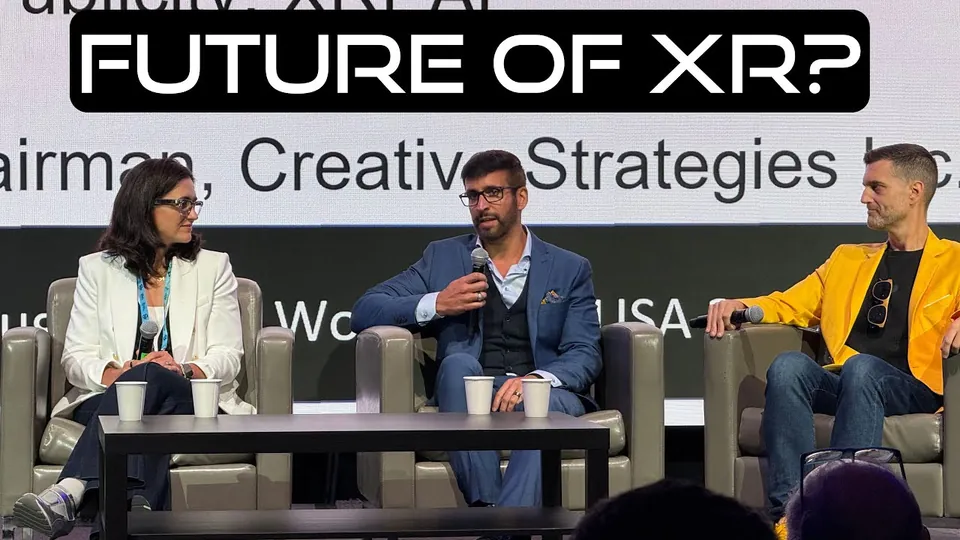
Prefer to watch? The full video is right here. 54:09 · Watch on YouTube
Jump to a section in the video
AI is what bent the curve
Tim opened with Ray-Ban Meta's sales: over 2 million. Kelly corrected the framing: that was last year, and Meta is now on the hockey stick, struggling to keep inventory in stock. She credits the Super Bowl ad and people's growing comfort with AI, citing ChatGPT's user growth.
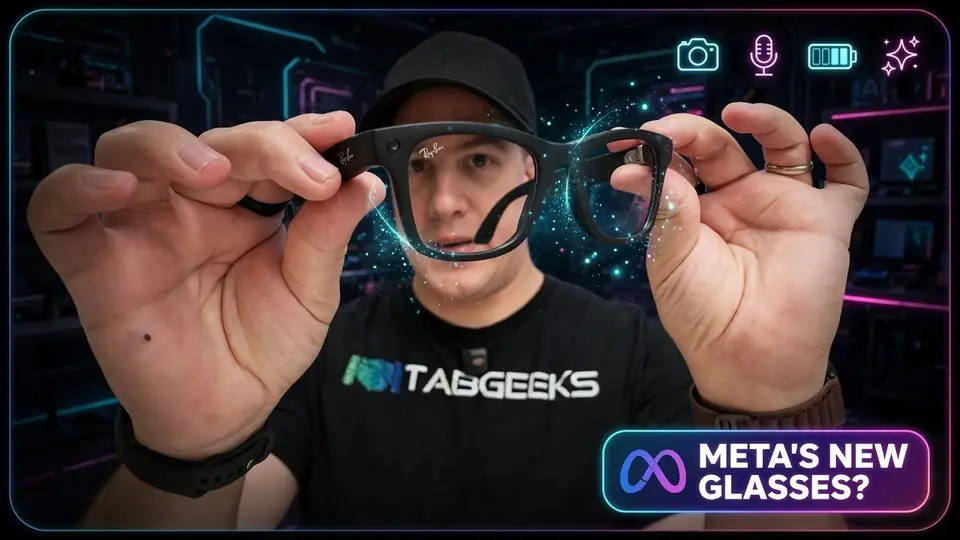
Meta is leaning into features beyond what she called Wikipedia on your head. Live AI is conversational: say "Hey Meta" once and keep talking without repeating the wake word. Live translation speaks French, Italian or Spanish into your ear, with improved latency. Kelly asked her glasses to remember where she parked at the airport and remind her when she landed at midnight. A developer access toolkit is coming in Q4.
Jason added that the power is in how natural it feels. You stop figuring out what to do with the device. And the first person camera view takes you right back to the moment, because it is through your own eyes.
AI glasses vs display glasses
Kelly's view is that AI glasses, light, Ray-Ban styled, with cameras, audio and AI, are the ones that bring everyone into the market. Displays are still heavy and add lenses, weight and cost. Ray-Ban Stories launched in 2020, and only now are we hitting early mainstream. Her guess for display glasses going mainstream is probably after 2030. Once people are trained on AI glasses, displays become a feature that adds confidence, like seeing a live translation in your lens when you missed a word.
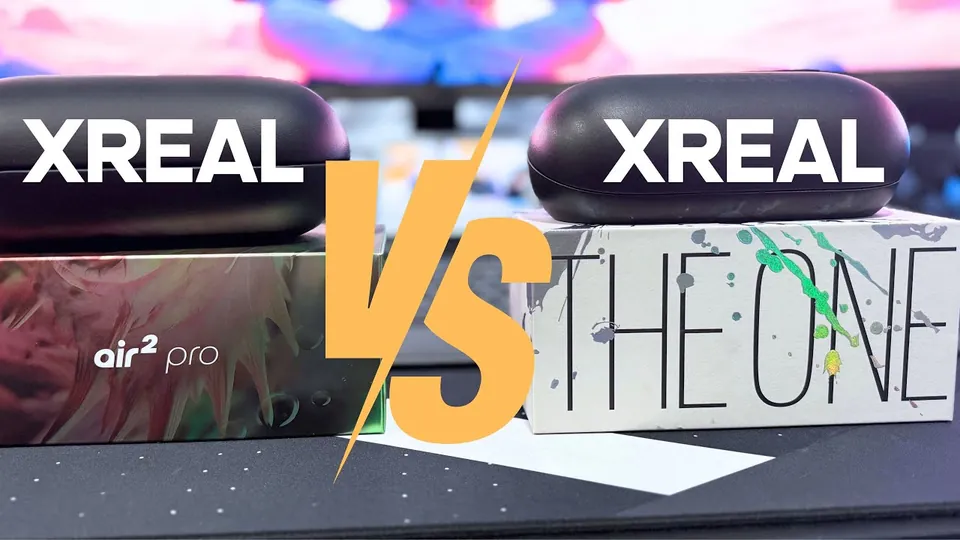
Ralph comes from the other side. XREAL has shipped wearable display glasses since around 2019 and 2020, starting with big triangular birdbath optics, plugging into phones, Steam Decks, ROG Allys, Switches, PCs, Macs, Xboxes and PlayStations. The goal is to keep shrinking that optic until it disappears.
XREAL's optics progress, per Ralph
| Measure | As stated |
|---|---|
| Flat prism thickness | 11 mm |
| Size vs previous birdbath | 44% smaller |
| Image size today | 15% larger |
| Current field of view | Up to 57 degrees, up from the 30s a few years ago |
| Project Aura field of view | 70 degrees |
As stated on the AWE 2025 panel.
He frames it as all-day wearables versus all-day portables. XREAL is not trying to be worn all day. It is small and light enough to live in your bag, so you can sit down and get a 300 to 400 inch screen, bigger than the airplane fuselage around you. Small fields of view are fine for notifications. XREAL wants cinematic.
What consumers and enterprises are asking for
For Ray-Ban Meta, Kelly listed lighter weight, since they can still pinch for all-day wear, and louder audio, which Meta says it is going to fix. People want more styles, since today's glasses are mostly worn by men, and they want a display. Prescription wearers especially want lighter frames. Economics are hard too: eyewear retailers expect analog glasses margins on a consumer electronics product.
Ralph's customers have a simpler request: replace all my screens. Connect to a phone or laptop and get a 32:9 canvas anywhere, anchored where you want it, even speaker notes pinned to the back of the room. Next, they want a larger field of view and smaller, lighter glasses, at the same time.
“Replace all my screens. This is our simple value proposition.”
Jason said enterprise customers do not want consumer openness. They want AI glasses trained on their own business, secured so only the organization can access it. Instead of a remote expert, you get an on-device expert trained on your processes. Giving someone open-ended glasses is like handing them a blank page; giving them glasses built for a specific job gets them working right away.
Hardware needs vary. A tether can be a non-starter in some environments, like a clean room bunny suit with no pockets. But hands-free, contextual information has almost universal appeal, and nobody cares about style in a bunny suit. When workers do not have to stop and look things up, he says, speed and efficiency go through the roof.
He also pointed to privacy for display glasses. In healthcare, finance, a doctor's office or a coffee shop, a private screen only you can see solves the over-the-shoulder problem. Ralph added that a doctor can simply hand a patient the glasses to show them something.
Platforms: Android XR vs Horizon OS
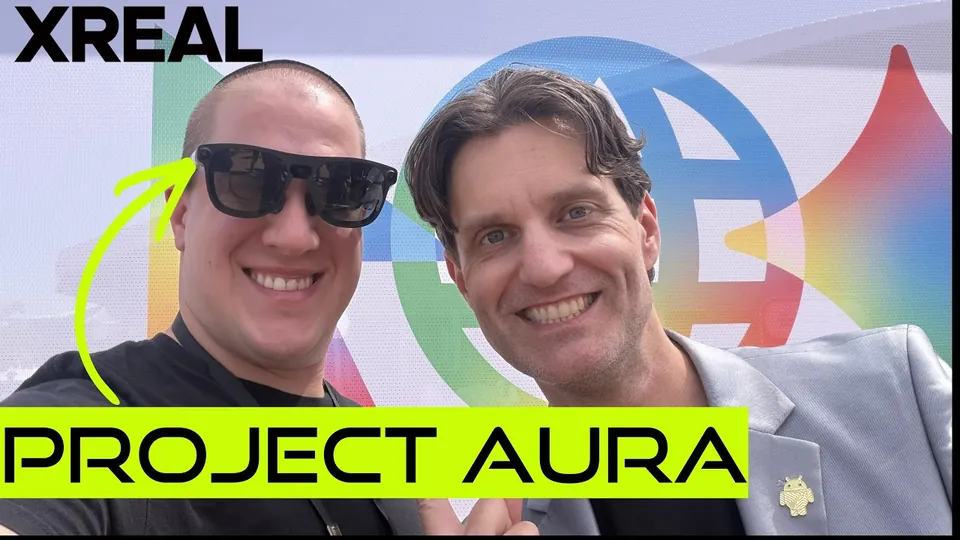
Tim compared this to the PC and smartphone OS wars: Android XR, Meta's Horizon OS and whatever Apple brings. XREAL has committed to Android XR with Project Aura, announced at Google I/O as the first optical see-through device for the platform, with a 70 degree field of view, a flat prism lens, a chip in the glasses and a Snapdragon in a compute unit. Ralph's pitch to developers: if you build for Android today, or for Samsung's Project Moohan, you can come to Aura tomorrow.
Jason, whose company works with both Google and Meta, said the industry needs coalescence around common platforms so small developers can keep making money instead of chasing a new platform for every device. Android XR's advantage, like Apple Vision Pro at launch, is a big existing library of 2D apps.
Kelly said Meta's focus is scale. Horizon OS powers its VR and mixed reality devices, and the goal is a flywheel: get enough devices in market, around 10 million, that developers can make money. Designing for AR and AI glasses is drastically different from a Horizon OS game, and Meta will talk more with developers at Connect in September.
What the next two years look like
Kelly expects double digit millions of units, more entrants and more choice, not just in styles but in ecosystems. Instead of one lonely shelf at Best Buy or Target, glasses get a whole end cap, the way Nest thermostats had to create a category. Expect noise, and consumers picking which ecosystem to bet on.
Jason sees glasses as part of a constellation of devices that talk to each other, not a singular device. Simple wins will hit the mass market, like seeing where your car, your dog or your keys are through a heads-up display, and that is what drives hundreds of millions of devices and lower costs. Ralph agreed: glasses will not replace phones for generations. The conversation across devices is the story of the next couple of years.
Bottom line
My takeaway: there will not be one smart glass. AI glasses are the on-ramp today, display glasses like XREAL's are the portable big screen, and full AR is still working through power, heat and battery. Platform choices made now, Android XR or Horizon OS, will decide where developers go. And as Jason pointed out, AI keeps proving our timelines were wildly conservative.
Gear in this story
- XREAL glasses (affiliate link)xreal.pxf.io (opens in a new tab)
- Ray-Ban Meta glasses
Some of these store links are affiliate links. If you buy through them, the channel may get a small commission at no extra cost to you. Affiliate disclosure
Related stories
XREAL Project Aura at Google I/O: everything Ralph Jodice told me
May 29, 2026 · 5 min read
XREAL Air 2 Pro vs XREAL One: which display glasses should you buy?
Jan 17, 2025 · 4 min read
Hands-on with the new Meta Ray-Ban Gen 3: Aviators, a camera-free option and a smaller camera
Sep 25, 2026 · 4 min read
Jesse Nowlin
Founder of TABGEEKS, former IT Director and Google Developer Expert. I test networking and pro tech on real job sites, then write up what I find.
Join the community