

Home / Stories / AI at work
Can 10 engineers vibe code an AI racing coach with Google's Antigravity?
Ten engineers, two weeks of planning, one day at Thunderhill Raceway: could vibe coding with Google's Antigravity and Gemini produce an AI driving coach that holds up against pro instinct? Here is what worked, what didn't and what the track's CEO thought.

Jesse Nowlin
Founder, TABGEEKS · · 3 min read
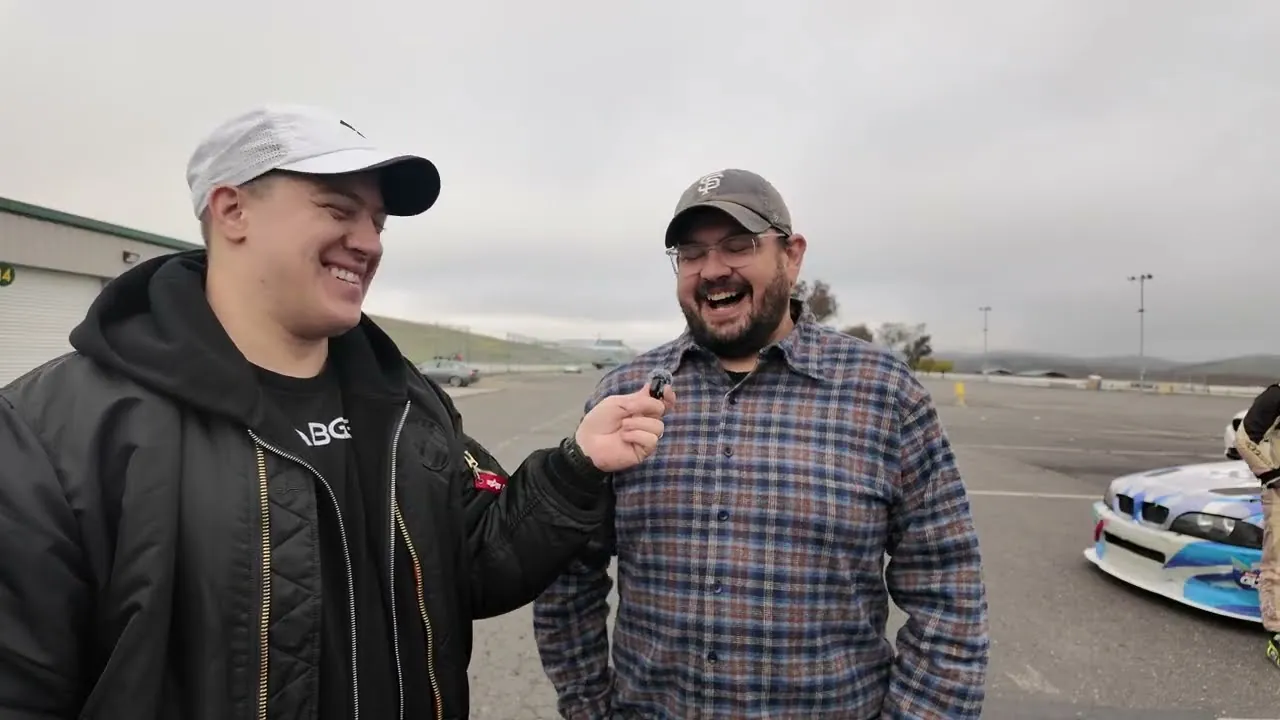
What can AI actually do? I get asked that all the time, in person and on the channel. So I went to Thunderhill Raceway in Northern California, on a very foggy morning, to watch a team try to answer a sharper version of it: can an AI driving coach built on Gemini go up against the instinct and experience of professional race drivers?
The challenge was issued two weeks earlier. Could 10 engineers, mostly vibe coding with Google's Antigravity, build an app that matches or beats the state of the art in driving coaching? By the end of the day the hardware worked great and the AI coaching mostly did not, but the telemetry tools impressed the people who know racing best.
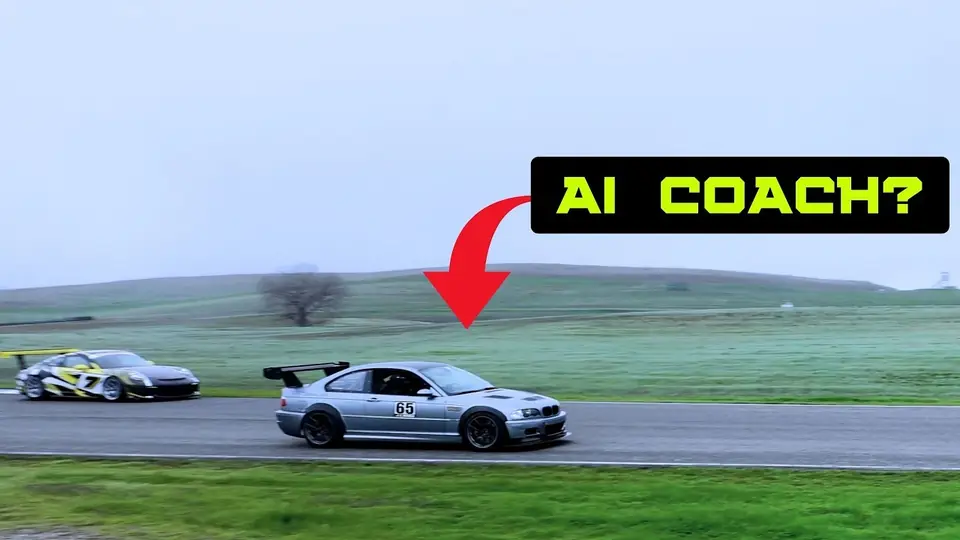
Prefer to watch? The full video is right here. 10:10 · Watch on YouTube
Jump to a section in the video
The first decision: real time or not
The team's biggest early question was whether coaching had to happen in real time. If it did, they needed a fast model. If analysis could happen offline, they could chase quality instead. On top of that was trust. If a driver is doing 120 mph and the system says brake later, it had better be right, because if it is not, the car is going off track.
Vibe coding on the way to the track
At 7:00 AM in Sacramento, cold and foggy, the team was still coding in the car, connected to 5G hotspots and working in Antigravity. At the track they met the car for the first time and rigged up a laptop data capture unit, with one cable under stress because the laptop only had two ports on one side. At 9:53 AM they were still bug testing live.
The morning was triage. Between every lap, pit lane became a live lab. The team fought hardware vibration and software bugs in real time, using Antigravity to vibe code fixes and push new logic on the fly, testing and failing until the AI could keep up with the car.
Nano over Flash for speed
Latency forced the model choice. Gemini Flash was too slow for a race car. Gemini Nano hit the speed target, but raw Nano with an unguided prompt only gave some useful responses. So an engineer rode along with the driver to shape the responses coming out of Nano.
“Hardware worked great. The AI did not.”
Even so, the drivers lit up at the data views. Seeing throttle, steering and track position on screen together was better than anything they had used. The app could even generate a podcast-style breakdown of your telemetry, a show called Track Limits that turns raw data into lap time.
What the track's CEO thought
Matt, the CEO of Thunderhill Raceway, watched the early demo and was blunt: it was already light years ahead of what exists in the market. He admitted he thought we were a little insane at first, because consumer AI often feels like it overpromises and underdelivers. This felt like the opposite, and he said AI needs wins like that.
“You guys have done more in a day than the entire industry has done in 40 years.”
I asked whether AI's lack of gut feeling worried him, since so much coaching is experience and emotion. Not at all. He said it will never be one or the other. Great teams marry the two, and AI makes that much more repeatable and accurate, without guessing.
The final session
The last session had some drama. The team went out in the wrong session and ran into traffic, then built their own gap for one clean shot before the checkered flag. Every sector came together, they got pointed past slower cars, and even running a little fuel starved into turn three, they put down a 1:57.25. The coaching audio, on the other hand, did nothing that lap. The drivers heard it all the way to the starting line, and that was it.
Bottom line
Did vibe coding beat a pro coach in a day? No. But the hardware held up, the code was running, the telemetry tools impressed pro drivers and the track's CEO, and the team learned that Nano is the path to real-time speed. As one driver pointed out, new race car builds sometimes roll off the trailer and never turn a lap. With all the data captured, part two is the obvious next step.
Related stories
Shadow IT on steroids: how to govern AI agents at work
Oct 7, 2026 · 7 min read
Your IT stack is bloated: how to simplify and secure it for 2026, with Promevo's Colin McCarthy
Dec 2, 2025 · 7 min read
What is Meta Muse? A week with Meta's new personal AI agent
Sep 23, 2026 · 6 min read
Jesse Nowlin
Founder of TABGEEKS, former IT Director and Google Developer Expert. I test networking and pro tech on real job sites, then write up what I find.
Join the community